Liberty Hotel Saigon Parkview
Address: 265 Pham Ngu Lao St., Ben Thanh Ward, HCMC, Vietnam
T: +84 (28) 3837 0772; +84 (0) 399 492 410
E: salesbanquet.lpv@libertyhotels.com.vn; sales.lpv@libertyhotels.com.vn
W: www.odysseahotels.com - www.libertysaigonparkview.com
Here are accommodation options nearby, roughly from closest outward. Distances are approximate, since the exact walking route can vary.
You may choose the Hotel of your choice and budget from popular booking sites, such as:
You’re staying in a very convenient part of Ho Chi Minh City. Liberty Hotel Saigon Parkview is at 265 Ph?m Ng? Lão Street, beside 23 September Park in central Ho Chi Minh City, in the area visitors traditionally know as District 1. The hotel says B?n Thành Market is about a 10-minute walk away
Ho Chi Minh City (still fondly called Saigon by locals) is a captivating whirlwind of a city. It seamlessly blends a chaotic, high-energy modern metropolis with deep-rooted history, incredible street culture, and some of the best food in the world.
If you are considering a trip, here is exactly why Ho Chi Minh City deserves a spot on your travel itinerary:
From humble sidewalk plastic stools to Michelin-starred dining, the city is a paradise for food lovers.
The Street Food: You can eat your way through iconic dishes like Ph?, Bánh mì, and C?m t?m (broken rice) at any hour of the day.
The Coffee Culture: Saigon runs on caffeine. You can spend afternoons sipping Cà phê s?a ?á (iced condensed milk coffee) or trendy coconut coffees in hidden, colonial-era apartment cafes.
Seafood Street (V?nh Khánh): A legendary street dedicated entirely to eating fresh snails, shellfish, and seafood grilled right on the sidewalk.
For history buffs, the city offers a raw, immersive look into the past, particularly the remnants of the Vietnam War and French colonial influence.
The War Remnants Museum: A profoundly moving and vital stop to understand the Vietnamese perspective of the war.
The Cu Chi Tunnels: Located just outside the city, this massive network of underground tunnels showcases the immense ingenuity and resilience of the Viet Cong guerrillas.
Colonial Architecture: Stroll through District 1 to see stunning landmarks like the Saigon Notre-Dame Basilica, the Central Post Office (designed by Gustave Eiffel's company), and the majestic Saigon Opera House.
When the sun goes down, the city's energy shifts into overdrive.
Rooftop Bars: HCMC has one of the best rooftop bar scenes in Southeast Asia, offering stunning panoramic views of the Saigon River and glittering skyscrapers like the Bitexco Financial Tower.
Bui Vien Walking Street: If you want neon lights, loud music, and cheap beer, this backpacker hub is a wild sensory overload.
Live Music: The city has a thriving indie music and jazz scene hidden away in intimate, atmospheric bars.
The true magic of Saigon is found when you get lost in its h?ms (alleys).
The Alley Culture: Turning off a main street into a labyrinth of narrow residential alleys reveals a completely different world of quiet neighborhood life, hidden temples, and secret food stalls.
Cholon (Chinatown): Located in District 5, this is one of the world's largest Chinatowns. It’s a bustling maze of traditional medicine shops, massive wholesale markets, and beautiful, incense-filled pagodas like Thien Hau.
Your travel budget stretches incredibly far here. Luxury 5-star hotels, high-end spa treatments, and gourmet meals cost a fraction of what they would in Western or other major Asian hubs. More importantly, the locals are famously resilient, welcoming, and sharp-witted, making interactions a highlight of the trip.
Assuming you arrive at Tan Son Nhat International Airport (SGN), I would use GrabCar for your first journey, particularly if you have luggage. The airport officially permits Grab as one of its ride-hailing operators. The hotel is roughly 7–8 km from the central airport area, but traffic means you should normally allow around 25–45 minutes. Current 2026 planning estimates for an app-booked car to central District 1 are roughly 120,000–200,000 VND, sometimes higher during rain or rush hour. Check the price shown in the app before confirming.
In Grab, enter exactly:
Liberty Hotel Saigon Parkview
265 Ph?m Ng? Lão, Ho Chi Minh City
Follow the airport signs to the ride-hailing pickup area shown in the Grab app and check that the number plate matches before getting into the car. If you prefer an ordinary taxi, use only the official airport taxi queue. Vinasun and Mai Linh are among the licensed operators; avoid people approaching you inside arrivals offering a private taxi.
If you're arriving internationally at Terminal 2 and do not have a lot of luggage, Bus 152 is a very cheap option. In 2026 it picks up directly at International Terminal 2, costs about 5,000 VND, operates roughly 05:00–22:00, and runs approximately every 12–20 minutes. It goes through the B?n Thành/central area, with the trip taking around 55 minutes depending on traffic.
Your hotel is close enough to the central stops that you can walk the final part. With a large suitcase, however, I would pay the small extra amount for Grab rather than use the bus.
You may also see Bus 109 recommended online. It is extremely convenient for your hotel because it terminates at Saigon Bus Station beside 23 September Park, very close to Liberty Parkview. However, according to the May 2026 route information, Bus 109 now serves Terminal 3, not International Terminal 2, so an international arrival would first need the airport shuttle to T3. It costs about 15,000 VND and takes around 45 minutes to the park.
Your location is good enough that you should walk + use Grab for most sightseeing. You do not need to rent a car or motorbike.
Bùi Vi?n Walking Street is essentially around the corner from the hotel, so you can walk there in a few minutes. It is the main backpacker/nightlife area. The city's tourism site lists the walking-street area around Bùi Vi?n–Ph?m Ng? Lão–?? Thám.
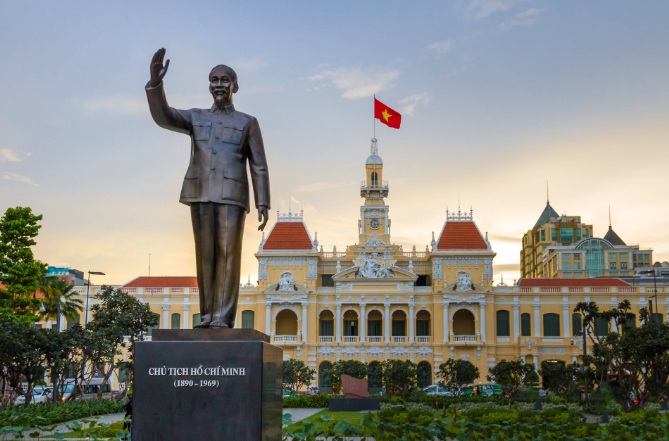
B?n Thành Market is roughly a 10-minute walk from your hotel. From there you can continue towards Nguy?n Hu? Walking Street, the Opera House, City Hall and the Saigon River.
For places that are slightly farther away — War Remnants Museum, Jade Emperor Pagoda, Chinatown/Ch? L?n, Landmark 81, etc. — use GrabCar, GrabBike, Be or Xanh SM. GrabBike is inexpensive, but if you're unfamiliar with heavy Vietnamese traffic, GrabCar is the more comfortable choice.
Ho Chi Minh City's Metro Line 1 operates from B?n Thành to Su?i Tiên through Opera House, Ba Son, V?n Thánh, Tân C?ng, Th?o ?i?n, An Phú and farther east. It is useful if you want to visit Th?o ?i?n, explore along the eastern side of the city or simply try the metro.
Single fares are currently 7,000–20,000 VND when paying cash, depending on distance. There is also a 40,000 VND unlimited one-day ticket and a 90,000 VND three-day ticket.
For your hotel, B?n Thành station is the relevant starting point.
For a first trip, a very easy sightseeing route is:
Hotel → B?n Thành Market → Independence Palace → Notre-Dame Cathedral area → Central Post Office → Nguy?n Hu? Walking Street → Saigon River → back towards Bùi Vi?n in the evening.
Most of that can be done on foot with an occasional Grab. Nguy?n Hu? is one of the city's principal pedestrian areas with restaurants, cafés and evening activity.
On another day, visit the War Remnants Museum, and if you have enough days consider a Mekong Delta or C? Chi Tunnels day trip.
The main practical things I'd keep in mind are:
One final important point is your Vietnam entry permission. Visa requirements depend on your passport, so check before travelling. Vietnam's official Immigration Department e-visa system is the safest place to verify/apply; e-visas can be issued for up to 90 days where applicable. Official Vietnam e-Visa website


Copyright © 2026 IRSET-27. All Rights Reserved.


Skype : support@eares.org
+351920489940, +905333069621, +91 9781001229









1.jpg)

.jpg)
2.jpg)
.jpg)


.jpg)
.jpg)

.jpg)

.jpg)


.jpg)


.jpg)
1.jpg)


.jpg)

.jpg)
.jpg)
.jpg)
.jpg)

.jpg)

.jpg)